
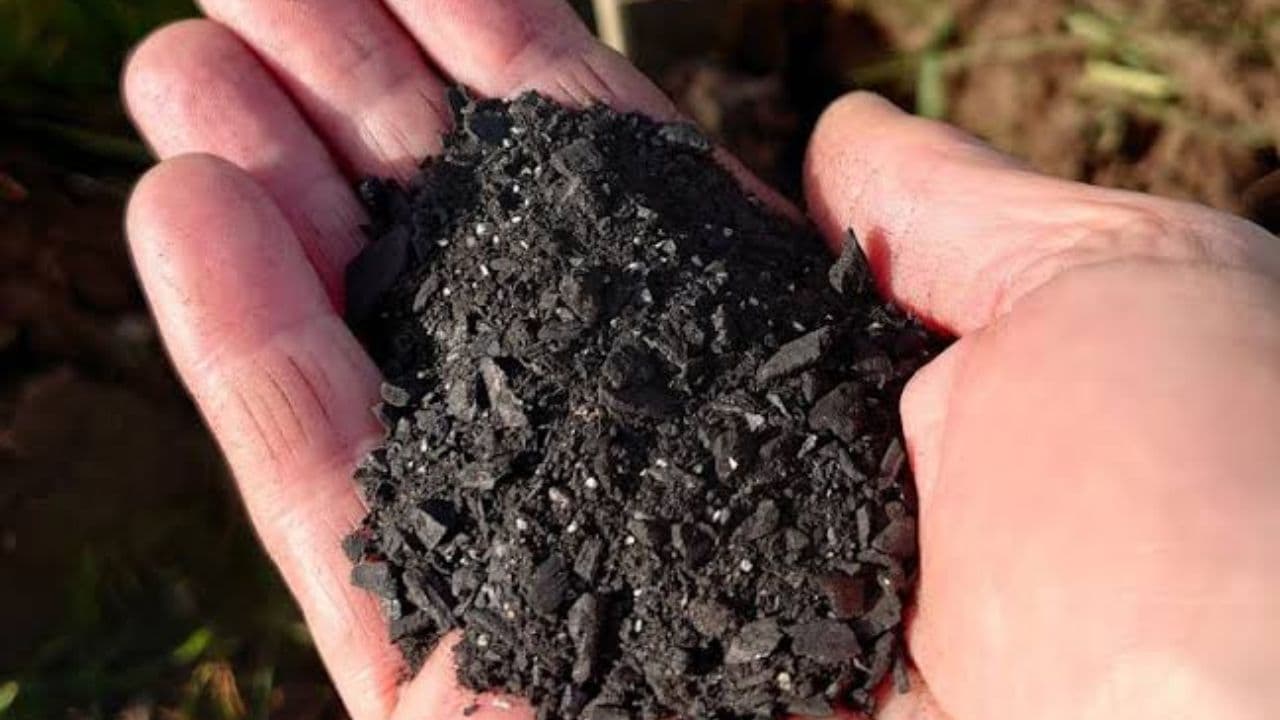
If you were drawing a map of India by how much spare biomass sits on each hectare, the Northeast would be the darkest patch on it. Bamboo across the hills, tea across the Brahmaputra valley, rice straw on the floodplain, jute, sawmill offcuts, and forest thinnings in every district.
And yet there are very few biochar carbon projects there.
That gap is not an accident, and it is not because nobody has noticed. It is because the Northeast combines the country's best feedstock position with its most difficult logistics, and projects designed for Punjab or Maharashtra fall over when they are copied across.
Here is what actually works in the region, and what does not.
What the Northeast has that nowhere else does
Bamboo, at scale. Depending on which survey you read, somewhere between half and two-thirds of India's bamboo growing stock is in the eight Northeastern states. It is the region's defining biomass resource: fast-growing, harvested selectively year after year, and processed in hundreds of small units that each throw off offcuts. Bamboo also makes genuinely good char — hard, stable, lignin-rich. Our guide to making biochar from bamboo covers the practical side.
Tea, at scale. Assam grows roughly half of India's tea, and every garden cuts its bushes back on a cycle, producing woody prunings. That is a large, annual, predictable stream — with a serious catch about existing uses, which is why it has a guide of its own.
Rice, jute and sawmills. The Brahmaputra and Barak floodplains grow a great deal of rice, and there is jute in lower Assam, sugarcane in pockets, and timber processing throughout. Rice straw behaves differently from woody material — high in silica, more ash, a softer char — and India's crop-residue opportunity goes into what that means.
Soils that want biochar. Much of the region's upland soil is acidic, leached by heavy rain and low in organic carbon. That is a real agronomic market on the doorstep, not a theoretical one.
The four things that make it hard
Nobody selling equipment will lead with these, so let us.
1. Rain
This is the big one, and it is the reason most first plans need rewriting.
Much of the Brahmaputra valley gets 2,000 to 3,000 mm of rain a year, most of it between June and September, and parts of Meghalaya get several times that. Wet biomass makes poor biochar: the fire spends its energy boiling water off, the temperature never climbs high enough, and the result is smoke, tar and a soft brown char that no laboratory will certify.
So drying and covered storage are not a line item in the Northeast. They are the project.
- Budget for a shed that holds several months of dry feedstock, not a tarpaulin.
- Look hard at waste-heat drying from the reactor. It costs more up front and rescues the annual output.
- Plan to stockpile in the dry months and run through the wet ones, and size the building accordingly.
2. Floods
The Brahmaputra floods most years, and the char yard, the feedstock shed and the access road all need to be above the line that local memory — not a map — says the water reaches. Ask the oldest people in the village, not the youngest engineer.
3. The corridor
The Northeast connects to the rest of India through the Siliguri corridor, a strip roughly 20 kilometres wide. Everything that leaves by road leaves that way. Guwahati is about 1,000 km from Kolkata and the nearest major port, and biochar is bulky and light — the worst possible combination for freight economics.
The conclusion is not that the region cannot work. It is that you should not be shipping biochar out of it.
4. Scattered supply
Biomass in the Northeast is plentiful but dispersed, across small holdings, hill terrain and poor roads. Collection radius means something quite different here than it does on the Punjab plain, and 50 km on a hill road is not 50 km on a highway. Feedstock mapping has to be done in travel time and real delivered cost, not in kilometres drawn on a screen.
The model that actually fits
Put those four constraints together and the shape of a working Northeast project falls out on its own.
| Works in the Northeast | Struggles in the Northeast | |
|---|---|---|
| Plant | Several small decentralised units near the biomass | One large central plant fed by long-haul trucking |
| Biochar | Used within tens of km — tea, horticulture, acid upland soils | Bagged and shipped to distant markets |
| Feedstock | Multiple streams, so something is always in season | A single crop with one harvest window |
| Storage | Large covered shed, monsoon stock built in advance | Just-in-time delivery |
| Revenue | Carbon credit travels; biochar stays | Freight-dependent product margin |
The insight worth holding onto: the carbon credit is weightless. It is the one thing you can sell to a buyer in Europe or California without a truck, a corridor or a port. The physical biochar should stay close to home and earn its keep locally, in soil that genuinely needs it. That combination — local product value plus global carbon value — is what makes the region's freight disadvantage survivable.
Where holdings are small and scattered, that usually points to an aggregated structure rather than a single owner. How FPOs and aggregators can co-own a project covers how to write the revenue share down before the money arrives, and we work directly with FPOs and cooperatives on exactly this.
The additionality question, regionally
Abundant biomass does not mean free biomass, and a registry will ask what your material does today.
This matters more in the Northeast than elsewhere, because there are genuine competing buyers. Industrial demand for bamboo in particular has grown, and where a large purchaser operates in your catchment, two things follow: local biomass has a price floor under it, and that material is plainly not surplus. Neither kills a project. Both mean you build around the streams the big buyer does not want.
There is also a harvesting point specific to bamboo. Cutting healthy standing bamboo only to make biochar is not carbon removal — you have moved carbon from a living plant into a bag. Credits hold up when the material is genuinely surplus: thinnings from a crowded clump, over-mature culms, workshop offcuts, storm-damaged material. Auditors check. Buyers ask.
One piece of genuinely good news
Since the Indian Forest (Amendment) Act, 2017, bamboo grown on non-forest land is no longer classed as a "tree". Felling and transit permits are generally not required, which removes a large amount of friction that would otherwise sit on top of every load. State transit rules still vary, so confirm with your local forest office before moving material — but the structural barrier is gone, and for a region built on bamboo that matters a great deal.
What to do before you spend anything
- Map supply in travel time, not kilometres. List every source within a realistic collection radius, with volume, season, owner and current use.
- Find out what each stream does today. This single question decides your additionality, and therefore your project.
- Identify the competing buyers in your catchment, and plan around them rather than against them.
- Solve drying on paper first. Cost the shed and the monsoon stockpile before you cost the reactor.
- Check the flood line with people who live there.
- Line up local biochar demand — tea estates, nurseries, horticulture — before you assume a product market.
- Make a sample and test it. Carbon content and the H:Corg ratio decide whether a registry issues credits, and those are set by how you pyrolyse.
Only then does equipment selection make sense. Choosing pyrolysis technology and comparing Verra VM0044, Puro.earth and Isometric are the next two decisions, in that order, and your registry choice should be made before you buy a machine because it sets what you must monitor.
The honest summary
The Northeast has the biomass. What it lacks is projects designed for its rain, its rivers and its roads.
Done properly — small plants near the material, biochar used locally, credits sold globally, and only genuinely surplus biomass in the hopper — the region has as strong a case as anywhere in India. Done as a copy of a plains project, it will drown in the monsoon and bleed out in freight.
If you have biomass in Assam or the hill states and want to know whether the numbers work in your own district, see how we assess feedstock and feasibility, or request a biochar project feasibility assessment and we will work through your rainfall, your radius and your supply with you.
Figures in this article are estimates as of September 2026 and vary by state, survey methodology, feedstock and season. Carbon credit revenue is never guaranteed, biomass must be genuinely surplus and sustainably sourced, and transit and forest rules differ by state — verify locally before committing money.